
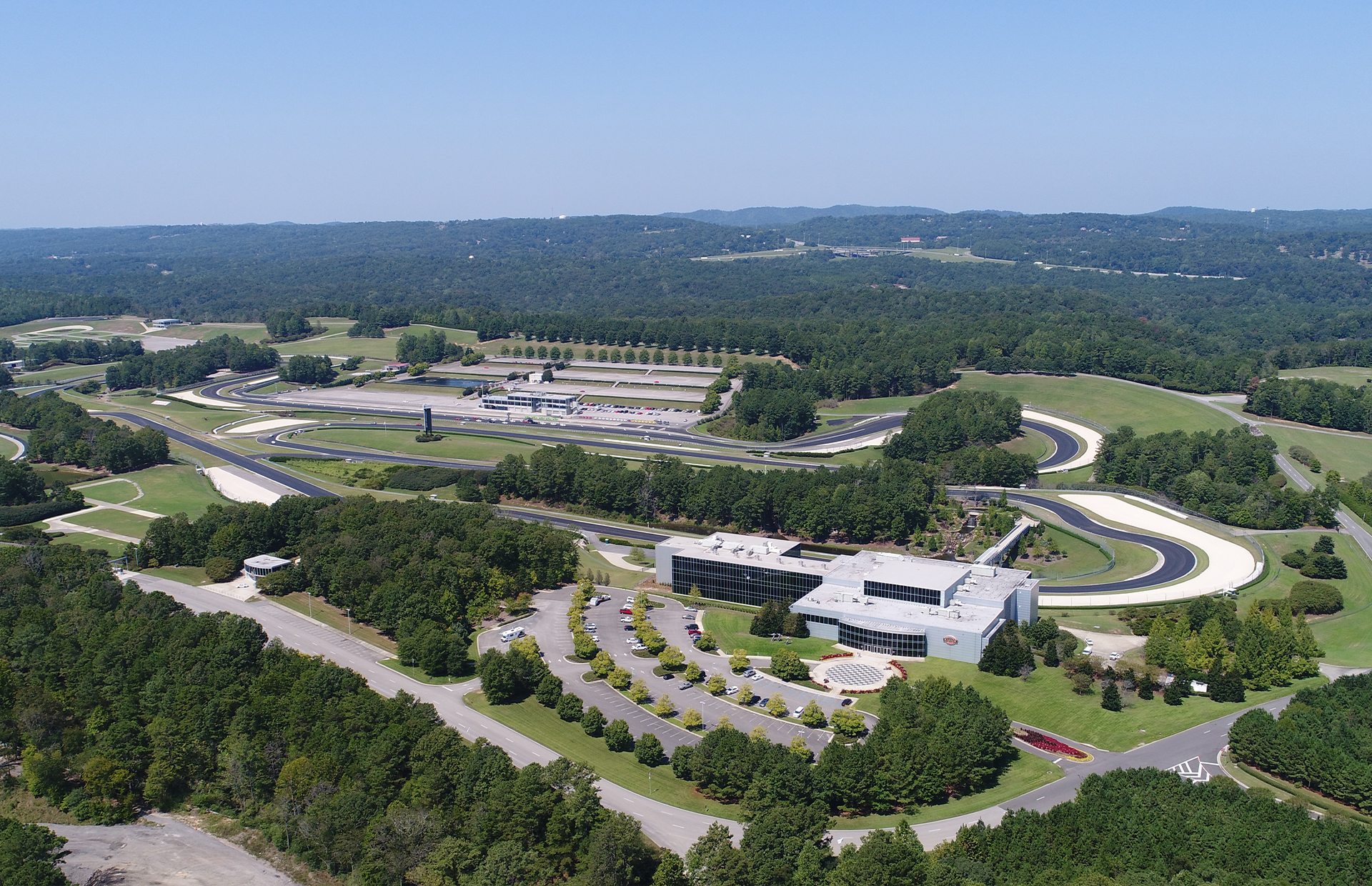
Welcome, my friends, to the first road course race of the 2026 IndyCar season. As large permanent fixtures on the landscape, road courses feature significant histories that make them feel different. Almost like the tracks and parks themselves have a personality. How appropriate, then, to be kicking of with Barber Motorsports Park, perhaps the most unique environment for racing on Earth.

Designed by legendary track architect, Alan Wilson, this 2.38 mile road course features 17 turns and 80 feet of elevation change. This is a proper IndyCar road course with the Children’s of Alabama Grand Prix, has been the main event here since 2010. Running 214 miles over 90 laps, this racer features action from the green flag to the checker thanks to four clear passing zone and a couple of other areas that offer opportunities for the particularly bold, as Christian Lundgaard demonstrated last year on his way to a second place finish.
At with a 45-foot track width, Barber is wider than Road America, Mid-Ohio, and Laguna Seca. Last year saw cars going three wide through the first three turns after the start of the race. The braking zone into turn 1 is one of the prime passing zones on the track. You’ll also see similar action into turns 5, 8 and 12. But passing doesn’t just happen in the braking zones. The generous width of the track means drivers can set up crossover moves especially through turns 5and 6, as well as 16 and 17. With top speeds reaching close to 180 miles per hour and qualifying speeds at 125 miles per hour, there’s a lot of the high speed, wheel-to-wheel action we’ve come to love from IndyCar at Barber.

Barber does not offer General Admission viewing overlooking the start/finish line, saving that space for media and race control and yes, some ritzy premium viewing areas. Instead, GA attendees will watch from the back stretch, which gives a view of the whole track except for turns 2 and 3. If you’re dying for the action there they do have smaller spectator areas surrounding those turns as well. Fan infrastructure including food, drinks, and souvenirs all exist behind the main grandstands, so your race day experience is pretty tidy and contained.
Unless, of course, you plan to visit the complex beyond the track.
As beautiful and technical as the track is, that’s only a tiny piece of why we love IndyCar racing at Barber. The art, the legend, and the history, all of which are visible on your TV screen give this place an legendary feel. It’s not just a racetrack, this place is a shrine to the beauty of motorsport, and that’s all because of George Barber Jr.

Driver, collector, enthusiast, philanthropist. Any and all of those descriptors apply to George Barber, who passed away earlier this year at the age of 85. His love of motorsport began early. George was the son of businessman George Barber Sr., but he made his name his own on the race track. He participated in Porsche races in the 1960’s, competing with the likes of Dan Gurney and Peter Gregg. Over his career George racked up 63 race wins, and was known as a leading talent. But in 1969 he took over Barber Dairies from his father, and focused his enthusiasm for motorsport outside of the cockpit. He began envisioning a way to give back to his community through motorsport, and after the sale of Barber Dairies in 1998 he was able to devote the money and effort needed to build something truly special. He didn’t waste much time – the track opened in 2003, just five years after the sale.
George’s love for motorsport went beyond the track, and his park reflects the beauty he saw in both the racing and the vehicles themselves. The story behind the American Motorsport Museum, located onsite, is the perfect reflection of this. George initially set out to build an impressive car collection, but struggled to imagine building something that would stand out among the many spectacular collections already in existence. It wasn’t until a friend suggested pivoting to motorcycles and gifted him two of his own (including a 1952 Victoria Bergmeister that seems to have started it all) that it clicked for George – motorcycles for him were both fast racing machines, as well as art to be displayed and admired.
The Guggenheim Museum agreed. In 1998 they borrowed and displayed 21 of George’s bikes as an exhibit titled “The Art of The Motorcycle”. The exhibition later visited Chicago and Bilbao, Spain. And with such great success, George was inspired to move his motorcycles from their home in Southside Birmingham to the grand facility within Barber Motorsports Park. The museum is now home to over 1600 motorcycles, more than 1000 of which are on display on any given day. And as George was first and foremost a racecar driver, we get to honor the car as well. The museum hosts the world’s largest collection of Lotus cars, anchored by the Lotus 21.
George saw art everywhere. His original mandate for the complex was to build “a botanical garden with a racetrack in it”. This was taken seriously. Today Barber houses a number of rare plants, including 17 Hightower Willow Oaks, which can only be found in two other locations in the world. You can tour the garden with a guide on an open air tram.

The infield provided another prime opportunity to bring beauty (maybe whimsy is the better word in this case) to the racing experience. Steel sculptures by Bill Secunda depicting spiders and dragonflies loom large over the track. A particularly fierce looking spider sits at the turn 5 and 6 complex. The turns are known as Charlotte’s Web, both in honor of the spider and a nod to the tangled web of passing opportunities you can set there if you’re patient. The outside of the track is less themed in its sculpture, but turn your head any which way and you’ll find Lions, decorative gates, a Sisyphus figure pushing a boulder, a wind powered kinetic pond sculpture, and you know, other seemingly random but seriously fascinating additions to the landscape.
All of this together, the track, the museum, the gardens, the art, create a race experience that is more singular than any other. It’s a cliche but in this case it is undeniably true: there is no place like this complex anywhere else on Earth.

If you’re heading to the race there are plenty of hotels from all the national chains near the track. For a more unique experience, we’d recommend driving the 25-minutes into Birmingham to experience one of these independent options. The first is the Hassinger Daniels Mansion, a four-story, beautifully restored Victorian mansion offering guest lodging on three floors. Originally built in 1898, it was listed on the National Historic Registry in 1976 and converted into a bed and breakfast in 2010 and has recently been upgraded under new ownership. A second option is The Painted Lady hotel, a 22-room luxury boutique establishment in what is rumored to have been a brothel in the 1800s. For a more modern experience, we recommend the John Hand Club and Hotel, located in the John Hand Building, a 21-story classic revival skyscraper.
To be honest, though, a park this unique deserves your full attention, and my only true recommendation is to camp onsite. They offer tent and RV camping, so whether you’re used to throwing a sleeping bag on the ground or you’re a little more of a glamper you’ll find something that works for you. Attend race weekend events, including a Grand Prix that always hits, and in between wander through the largest motorcycle museum in the world. Take a guided tour through gardens that house trees that you genuinely can’t find anywhere else. Check out some of the freakiest spider art around. And then wander back to your campsite for a beer. You can even bring your dog. Nothing in life is perfect, but that weekend sounds pretty damn close.
Birmingham is a highly underrated food city with plenty of locally owned restaurants with chef-driven menus. If you do chose to leave the track and the comfort of your campsite, or stay off-site and one of our recommended hotels, book a reservation at one of these eateries. You won’t be disappointed. Automatic Seafood and Oysters features a variety of seafood dishes, featuring fish primarily sourced from the Gulf of Mexico, oysters from waters along the Southern and Eastern coastlines. OvenBird, a live fire, casual restaurant that focuses on the seasonal southern ingredients. If you like your barbecue with a side of Jazz and Blues, then head over to Saw’s Juke Joint (or if you just want the BBQ any of the other Saw’s locations) an upscale dive that is a favorite of local diners.
That perfect race weekend feeling? That’s George Barber’s legacy. Thank you, George.


