
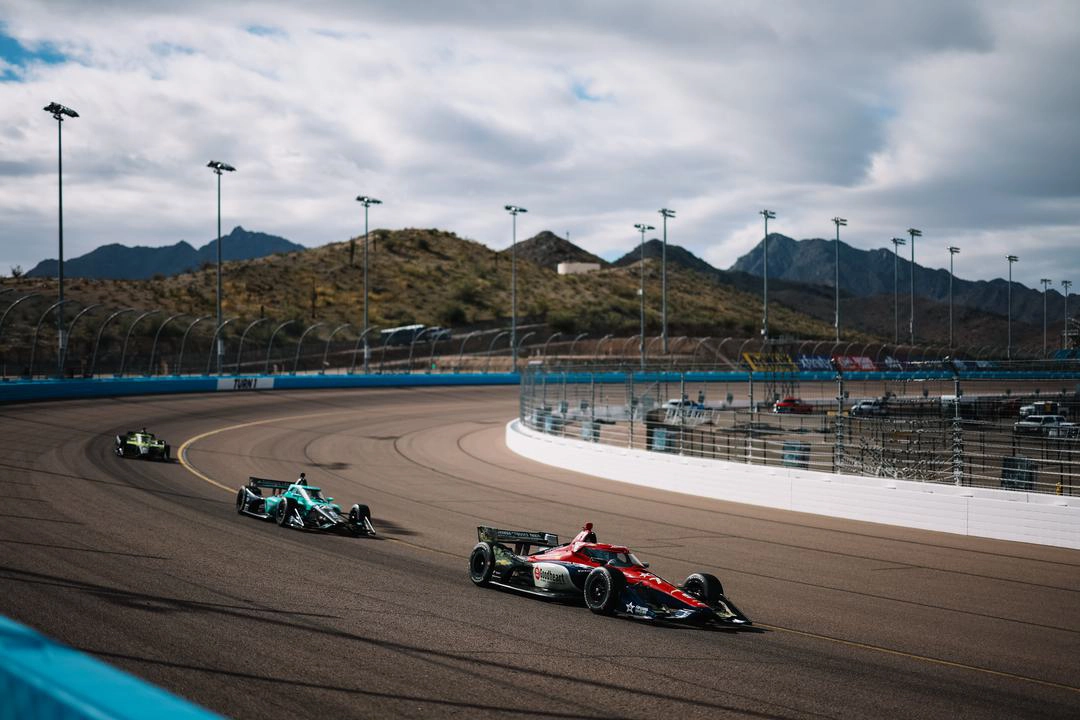
We humans (especially sports fans) have a tendency to romanticize the past. To look back on things that are gone and pine for those great forgotten times. And then every so often we get that chance, to pick up something from a past life and try it on again like it’s brand new. Maybe I’m just dramatic, but it’s with this spirit that I approach IndyCar’s return to the Phoenix International Raceway – a storied part of our past, and maybe, if we’re lucky, our long and happy future.
Modern race fans probably think of Phoenix as a NASCAR track. They’re fair in doing so, considering the track is owned by NASCAR and it plays host to two annual NASCAR races. But that doesn’t mean there’s not a long history of great open wheel racing here. The first event at Phoenix International Raceway was a 100-mile USAC Championship Car race in March of 1964. The winner was a guy you might have heard of, just a little legend named AJ Foyt.

Through USAC, CART, and IRL the series continued coming back annually (often two times a year) until their final race in 2005, citing low attendance as the reason for the cancellation. Listing winners here is essentially just listing legends – after AJ we’ve had Unser, Andretti, Mears, and Rahal, along with many other names that echo today as icons and heroes of the sport. After renovations in 2011, IndyCar arranged a comeback in 2016. We did get three years of spectacular racing, including wins from two of our favorites still on the grid today (Dixon in 2016 and Newgarden in 2018), but again, IndyCar cancelled the race following a fairly uninspiring in person crowd. And now we return to try our luck again.
The Track
And you know what? It’s worth that try because the track is pretty damn cool. We’ve got a one mile oval with a dogleg on the front straight. Ok, sounds pretty standard so far. Turns one and two bank at 9 degrees (that’s the same angle as notoriously flat Milwaukee) with three and four banking at 11 degrees. While that two degrees may not sound like much on paper, you’ll see it on TV, and our friends behind the wheel will feel it in the car. But that’s nothing compared to the banking variation on the straights. The front straight with the kink banks at 9 degrees, while the pin straight back stretch banks at just 3 degrees.

What this creates is a bit of a unicorn. Unlike, say, the IMS, where you optimize your setup and style for high baking turns and flat straights, here you’ll have to adapt for where you are at each moment. After all, each straight portion of the track, and each entry and exit to a corner, is different than any other spot on the course. There is no one optimal setup or way to drive. To win here, you’ll have to be well rounded, and you’ll really have to pay attention. Now combine that action created by the track itself with the possibility for a highline around the kink and in the corners? With drivers like Ferrucci and Rasmussen ready to risk it all and fly up high for the win? I’m ready for this race yesterday, please!
All this to say, let’s beef up attendance so we can keep this one on the calendar, yeah? This year the race is a doubleheader with NASCAR and takes place on Friday and Saturday vs the usual Saturday and Sunday. Tickets are purchased for the full day, so a ticket to Saturday’s IndyCar race also gets you a seat for the NASCAR action that evening. At time of writing a ticket for the grandstands around turns 3 and 4 was ranging from $45-65, which feels like a great price for a double header. If you’re feeling a little extra you can spend an additional $45 on the infield add-on package, where you get closer to the garages and more up close and personal with the teams.
The Experience
With 5 million residents spread out over 1,200 square miles, Phoenix has a lot to offer. While most people know the area for its myriad of golf courses, we enjoy the more active pursuits like hiking, mountain and biking, or exploring some of the cultural landscapes, including Taliesen West.
The track is on the southwest edge of the metro area, nestled into the corner of Estrella Mountain Regional Park. So while we love places we’ve stayed in the area like the Biltmore and Camelback Mountain Inn, you’re going to want to find someplace closer to the track on the south or west side of the city where there are no shortage of options. You’ll find all the national chains lining I-10, just a few miles north of the track and if that’s your jam, go for it. For a more premium experience, the Sheraton Grand at Wild Horse Pass is a bit east of the track and offers everything from tennis and hiking to a luxury spa and horseback riding. For those with a more modest budget, we’d suggest the Gila River Resort and Casino. It’s an easy 30-minute drive to the track. A final options that gets you closest to the raceway is on-site camping. While most people arrive with RVs and 5th wheelers, tent camping is allowed and there are ample showers and other facilities on site.


